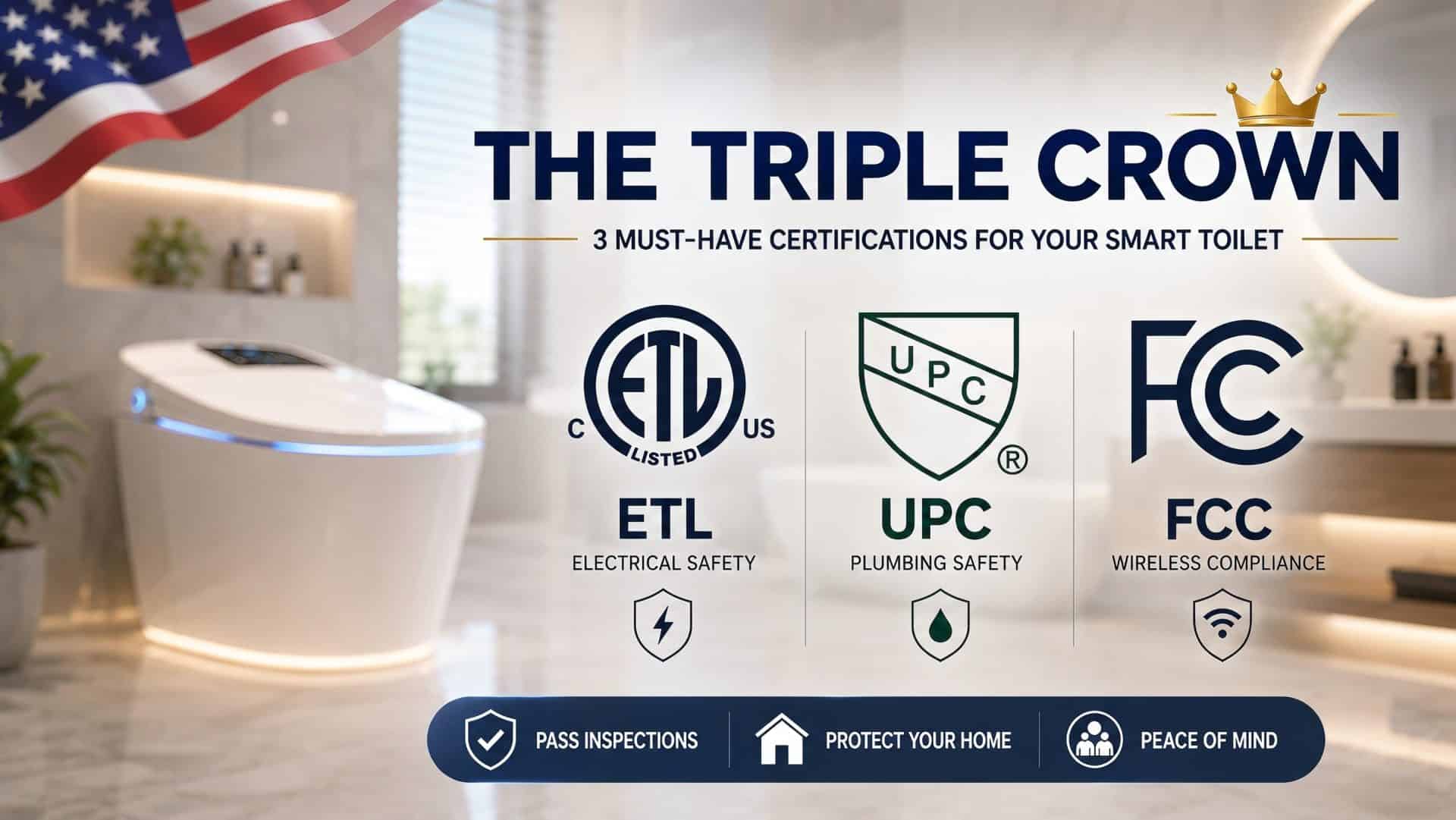

Upgrading to a luxury smart toilet is an exciting milestone for any modern bathroom renovation, but purchasing an uncertified unit can quickly turn your dream into a legal and financial nightmare. In the United States, thousands of homeowners face failed building inspections, denied insurance claims, and sudden electrical hazards simply because their newly purchased electronic bidets lack proper market clearance. To protect your family, investment, and property value, your luxury smart toilet must feature three critical markings: ETL, UPC, and FCC. This comprehensive 2026 breakdown explains why skipping even one of these “Triple Crown” certifications leaves your home exposed to severe liabilities.
ETL Certification: The Shield for Electrical Safety
Smart toilets are high-powered appliances deployed directly into wet zones. The ETL Listed Mark proves that your bidet has passed independent laboratory testing and meets stringent North American electrical safety codes.
- Covers high-draw heating elements safely.
- Prevents electrical shocks in wet environments.
- Evaluates internal circuit boards and sensors.
- Ensures full National Electrical Code compliance.
UPC Certification: The Guardian of Your Home Plumbing
The Uniform Plumbing Code (UPC) ensures your fixtures handle water safely without jeopardizing local infrastructure. Backflow prevention is the core focus here, guarding your fresh drinking lines from contamination.
- Prevents toxic backflow and water contamination.
- Verifies the structural integrity of the ceramic.
- Guarantees leak-free connections under high pressure.
- Required legally to obtain building permits.
FCC Compliance: Ensuring Seamless Wireless Harmony
With advanced microchips, remotes, and automated features, modern bidets are radio-frequency (RF)- emitting devices. An FCC mark ensures your bathroom tech plays nice with your household network.
- Regulates wireless remote control radio frequencies.
- Prevents signal interference with home Wi-Fi.
- Tests automated radar seat-activation sensors safely.
- Mandatory requirement for North American electronics.
The Real Risks of Skipping Certifications
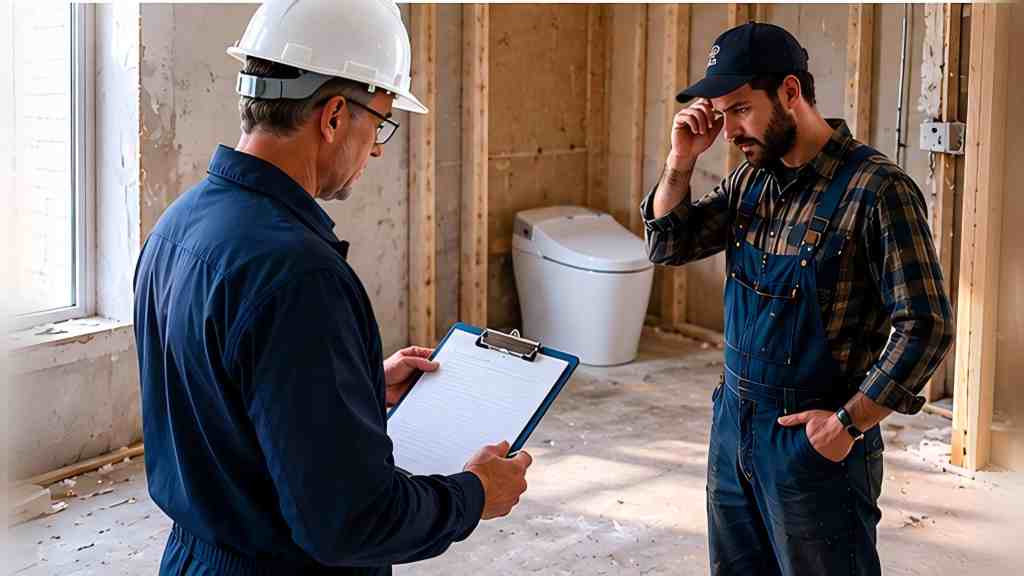
Many uncertified products hide on major online marketplaces. Saving a hundred dollars upfront by ignoring these badges can cost thousands later on.
- Uncertified plumbing fixtures void home insurance.
- Code violations can stall house sales.
- Licensed plumbers often refuse illegal installations.
Real Homeowner Scenario: The Price of a Skipped Stamp
“During a 2025 home remodel in Los Angeles, Mark bought a cheap, uncertified smart toilet online. When the city inspector arrived, the master bathroom renovation failed immediately due to a lack of a UPC stamp. The contractor couldn’t sign off, and a local plumber refused to install it. Mark had to return the unit and lost $1,500 in project delays. “
Frequently Asked Questions
Q: Can a plumber refuse to install an uncertified smart toilet?
A: Yes. Licensed US plumbers frequently refuse to install non-UPC-compliant fixtures to protect their professional licenses. They strictly look for certified safety stamps on the chassis before beginning any work to avoid liability.
Q: Why does a smart toilet need an FCC certification?
A: Smart toilets feature wireless remotes and radar motion sensors. The FCC certification guarantees these components do not emit harmful radio frequencies or interfere with your home Wi-Fi and smart devices.
Q: What is the main difference between UL and ETL marks?
A: Both marks prove a product meets rigorous national electrical safety standards. ETL tests to the same UL standards, meaning an ETL-listed smart toilet is fully compliant with US codes.
Before choosing your unit, check our comprehensive Smart Toilet Pre-Installation Guide to ensure your bathroom wiring and pressure specifications match your selected model flawlessly.