
As seasoned homeowners, managing household overhead is likely second nature to you. When looking to remodel the master bath, you might be tempted by the promise of a luxury electronic bidet. However, a nagging question often lingers: Will this high-tech addition quietly inflate my monthly water and electricity bills? In an era filled with deceptive “greenwashed” marketing slogans, it can be incredibly frustrating trying to figure out which claims are genuine.
The good news is that you do not have to guess. This article provides a comprehensive breakdown of the strict California Energy Commission (CEC) guidelines. By reading on, you will learn exactly how to verify true conservation metrics, dodge hidden utility fees, and select a certified eco-friendly smart toilet that pays for itself over time.
Decoding the CEC Standards: What the Numbers Actually Mean
The California Energy Commission sets the most rigorous conservation baselines in North America. To earn true eco-status, a product must meet these specific parameters.
- 1.28 GPF Ceiling: Residential toilets must not exceed 1.28 gallons per flush.
- Dual-Flush Credit: Premium models offer a reduced 0.8 GPF liquid flush.
- Strict State Compliance: CEC approval guarantees legality in water-scarce regions.
Smart Flushing Tech: How to Save Water Without Losing Power
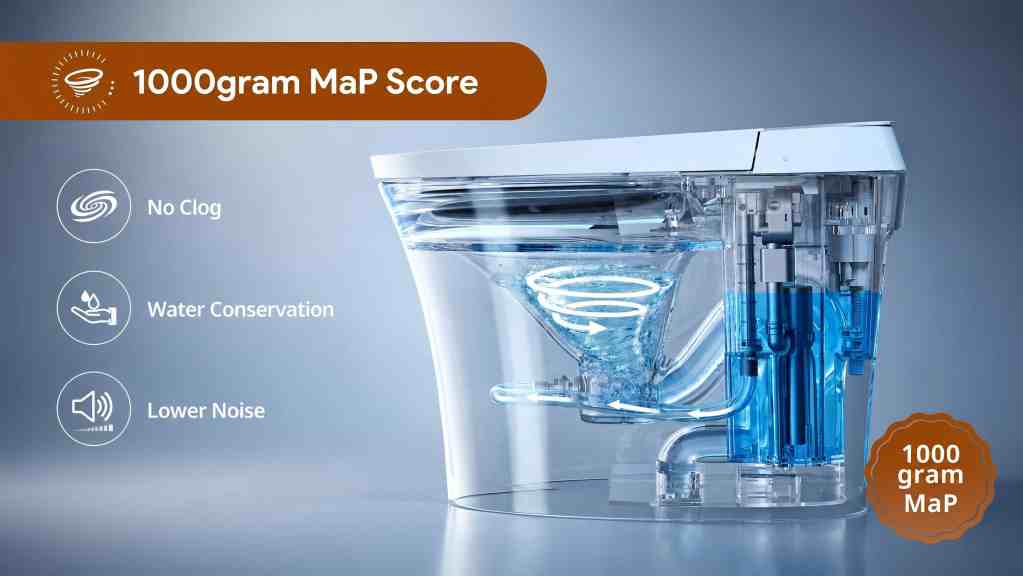
Many homeowners fear that “low-flow” means double-flushing. Modern engineering solves this issue completely without wasting water.
- Siphon Jet Boost: Uses high-velocity water jets to pull waste down instantly.
- Rimless Bowl Design: Directs water paths efficiently to maximize cleaning surface area.
- Pump-Assisted Force: Maintains robust pressure regardless of your home’s water pressure.
Electricity Efficiency: Beyond the Flush
An eco-friendly rating is not just about saving water; it also encompasses how the appliance draws power from your grid.
- Instant Tankless Heating: Heats water instantly on demand instead of keeping a tank warm.
- Smart Eco Mode: Lowers seat temperatures automatically during hours you are asleep.
- Low-Wattage Warm Dryers: Reduce dependence on paper towels while utilizing minimal electricity.
- LED Nightlights: Use less than 1 watt to safely guide night trips.
The True Financial ROI for American Homeowners
Investing in verified green technology yields predictable financial benefits that safeguard your household budget over time.
- Lower Utility Bills: Saves a typical family up to 13,000 gallons annually.
- Reduced Paper Cost: Efficient washing eliminates up to 80% of toilet paper expenses.
- Enhanced Appraised Value: Premium certified fixtures boost modern real estate appeal.
- Local Utility Rebates: Many US counties offer cash back for installing CEC-approved models.

* California Energy Commission data demonstrating the statewide economic and environmental benefits of appliance efficiency standards, including reductions in water use, energy consumption, utility costs, and carbon emissions.
Frequently Asked Questions
Q: What is the maximum water usage allowed for a CEC-compliant toilet?
A: Under the strict California Energy Commission (CEC) guidelines, a certified residential toilet must not use more than 1.28 gallons per flush (GPF). This is significantly lower than the standard federal requirement of 1.6 GPF.
Q: Do smart toilets use more electricity than standard appliances?
A: No. When equipped with instant heating systems and smart eco-modes, an energy-efficient smart toilet consumes minimal power, typically costing an average household less than $15 to $20 per year in electricity.
Q: Will a low-flow smart toilet clog more easily?
A: Not if it features advanced engineering. High-end eco-friendly smart toilets utilize powerful siphon jets or pump-assisted flushing mechanisms to clear waste completely using less than 1.28 gallons.
Final Thoughts
Upgrading your home does not mean you have to compromise on your sustainability values or your wallet. By selecting a certified CEC-compliant system, you protect our natural resources while actively reducing your monthly overhead.
To discover how these green choices can protect your equity down the road, explore our report on 2026 Real Estate Trends: Why Smart Toilets Increase Home Value, or learn about our health-focused advancements in Why UVC Sterilization is the New High-End Standard.
[Lower your bills today. Explore the Uncle Brown CEC-Certified Eco Collection.]