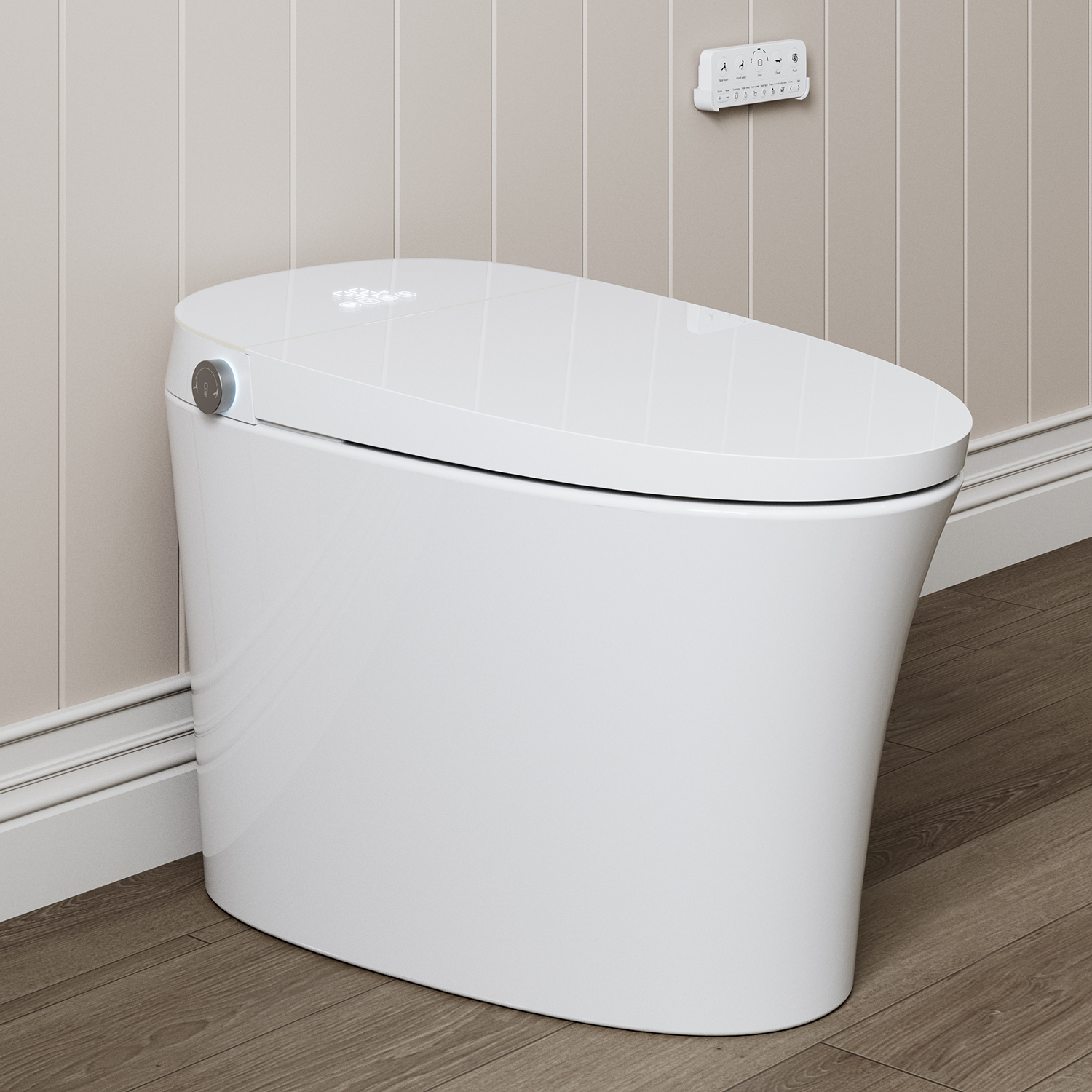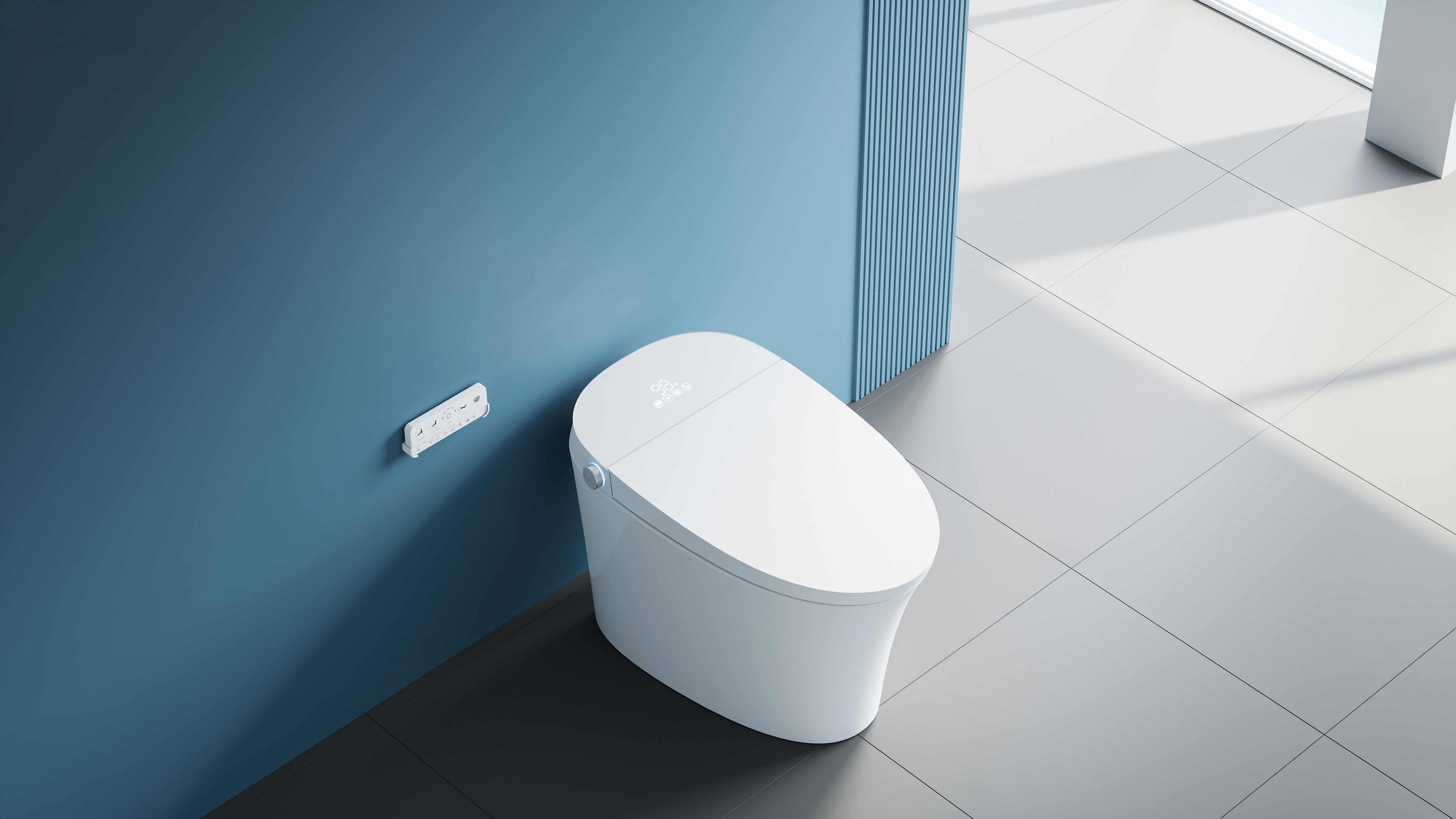
The Real Cost, Brand Premium, and Value Behind High-End and Budget Smart Toilets
Many American homeowners run into the same question when shopping for a smart toilet:
Why do some models cost several thousand dollars, while others sell for less than $500?
On the surface, they all seem to offer similar features — automatic flushing, heated seats, bidet washing, and touchless convenience. But the truth is, the price gap goes far beyond features alone. It reflects differences in research and development, quality control, after-sales service, brand strategy, and long-term business philosophy.
In this article, we’ll break down the real pricing logic behind the smart toilet industry, explain why some products are extremely expensive while others are surprisingly cheap, and help you understand what truly represents long-term value for your home.
Why Are Premium Smart Toilets So Expensive?
Brands like TOTO and Kohler have built strong reputations in the global smart toilet market for good reason. Their higher prices are not simply about “branding.”
Long-Term R&D Investment
Premium brands often spend decades developing flushing systems, hygiene technologies, water efficiency, electronic reliability, and user comfort innovations.
Stricter Quality Standards
High-end smart toilets typically go through extensive durability testing, leak prevention checks, electrical safety inspections, and lifespan evaluations.
Established Service Networks
Large premium brands maintain nationwide customer support, replacement parts systems, and professional service infrastructure — all of which increase operational costs.
Brand Reputation and Consumer Trust
Many consumers are willing to pay more for reliability, consistency, and peace of mind from established brands.
Brand Premium Is Also Part of the Price
At the same time, it’s important to acknowledge that luxury smart toilet pricing often includes significant brand markup.
For many middle-class American families, some premium models simply exceed a reasonable household budget.
Why Are Some Smart Toilets Under $500 So Cheap?
On the opposite end of the market, there are many ultra-low-priced smart toilets.
They may appear feature-rich on paper, but the question becomes:
How can they be sold so cheaply while remaining profitable?
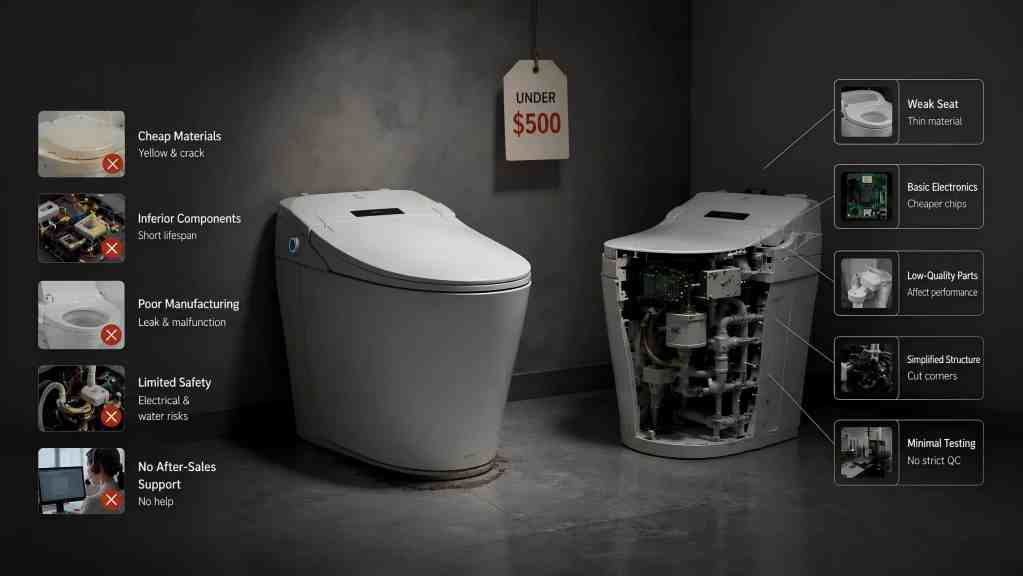
Reduced Material and Manufacturing Costs
Some low-cost products use lower-grade electronic components, plastics, internal structures, or simplified engineering to reduce expenses.
Limited Quality Control
Comprehensive testing requires time, equipment, and labor. Some budget products cut corners by reducing inspection and testing processes.
Weak After-Sales Support
Certain low-cost brands lack reliable customer service, replacement parts availability, or long-term technical support.
Minimal Long-Term Brand Investment
Many ultra-budget brands focus primarily on short-term sales volume rather than long-term customer trust and reputation.
A “Fast Money” Business Model
When a company competes mainly through extremely low pricing, it often creates unhealthy market competition that can eventually hurt product quality and consumer experience.
What Does Healthy Smart Toilet Pricing Actually Look Like?
A sustainable smart toilet brand needs pricing that supports long-term operation and customer satisfaction.
A healthy pricing structure typically includes:
- Research and development
- Product engineering and quality control
- Shipping and warehousing
- Management and operational costs
- Employee and service teams
- Marketing and brand building
- Customer support and warranty service
- Reasonable profit margins
Without healthy profit margins, companies struggle to continue improving products, maintaining support teams, and delivering reliable long-term service.
The healthiest business model is not necessarily the cheapest — it’s the one that delivers the best long-term value.
Why More American Families Are Looking for “Reasonable Value”
Today’s homeowners are becoming more practical and informed buyers.
Instead of simply chasing the cheapest or most expensive option, many middle-class families now focus on overall value.
Long-Term Reliability Matters More
Consumers increasingly care about how products perform over the years of daily use.
Service and Stability Influence Buying Decisions
Reliable customer support and product consistency are becoming major decision factors.
Consumers Are More Aware of Brand Markups
Many homeowners no longer want to overpay purely for branding or luxury positioning.
Families Want Balance
The most attractive products today are those that balance quality, comfort, service, and affordability.
Uncle Brown’s Pricing Philosophy

At Uncle Brown, we believe smart toilets should not be luxury products reserved for only a small group of people.
At the same time, we also believe the industry should move away from unhealthy low-price competition that sacrifices quality and service.
Our goal is simple:
Build a long-term, sustainable brand based on fair pricing and reasonable profit.
That means:
- Investing more into product quality and user experience
- Maintaining consistent quality control standards
- Providing reliable customer support
- Reducing unnecessary brand markup
- Building trust through long-term reputation rather than short-term discount tactics
To thank customers who choose Uncle Brown — and to improve inventory efficiency — we also run special promotions on selected days each month, allowing more families to experience high-quality smart toilet technology at a more accessible price.
Because in our view:
A truly good product should be built to last, reasonably priced, and accessible to more families.
Frequently Asked Questions
Q: Are more expensive smart toilets always better?
A: Not necessarily. Premium models often provide stronger technology, better materials, and more reliable support, but part of the price may also come from brand positioning and marketing.
Q: Are smart toilets under $500 worth buying?
A: Some budget smart toilets can meet basic needs, but buyers should carefully evaluate durability, quality control, warranty coverage, and long-term support before purchasing.
Q: What should American families prioritize when buying a smart toilet?
A: Focus on long-term value: comfort, hygiene, reliability, customer service, and overall ownership experience — not just the initial purchase price.
Invest in Transparent Value
Understanding the underlying economics of modern manufacturing empowers you to look past slick marketing slogans and cheap gimmicks alike.
If you are new to the world of bathroom automation and want to verify what essential components a reliable fixture must include, check out our baseline guide: What is a Smart Toilet? The Modern Homeowner’s Guide to Intelligent Bathrooms. Ready to ensure your home’s wiring can safely handle a new high-tech installation? Protect your equity by reviewing Water Meets Electricity: Why GFCI Outlets and Wet-Zone Safety Are Non-Negotiable for Your Smart Toilet.
[Stop paying for the label. Discover honest, high-end engineering with the Uncle Brown Collection today.]